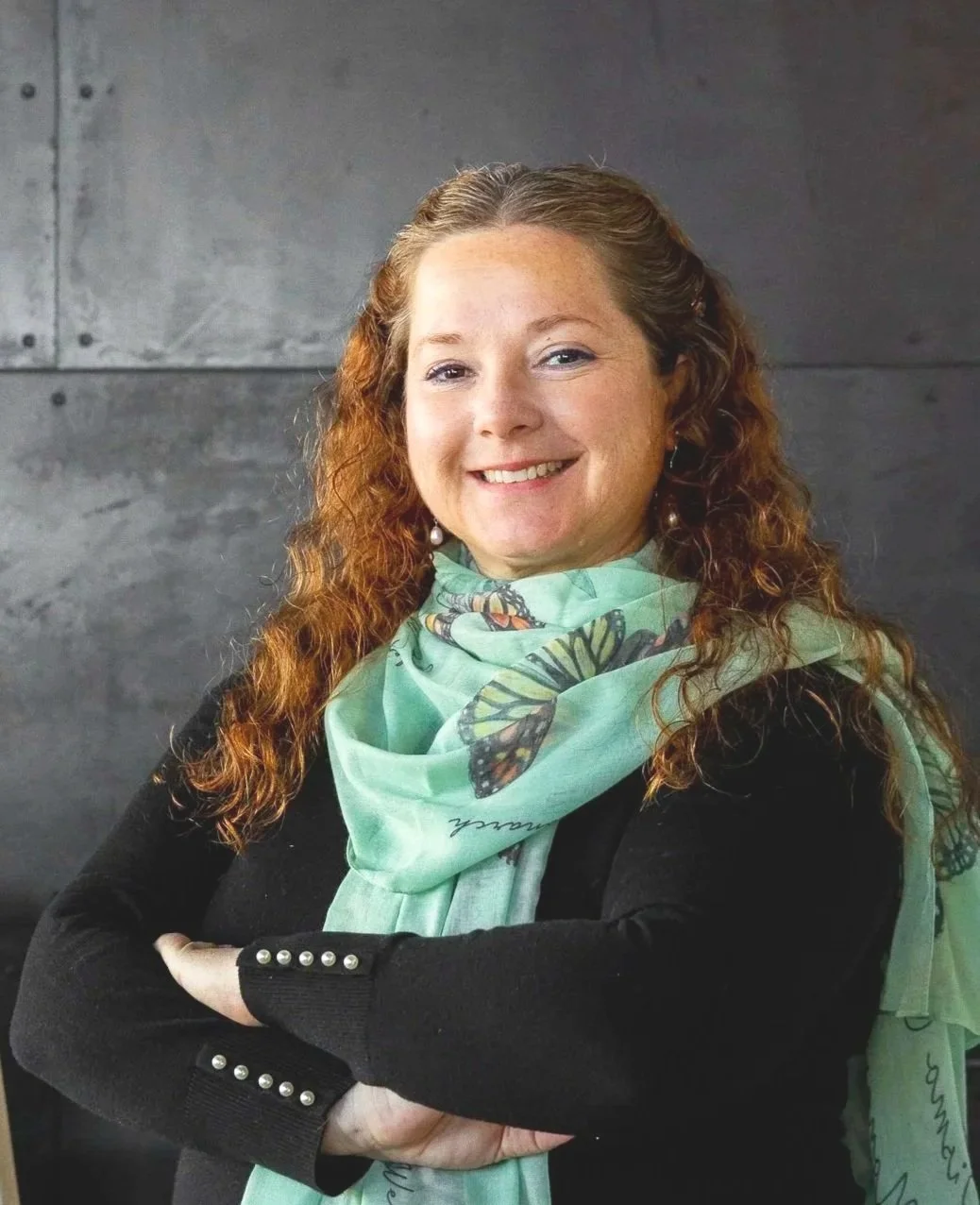
Meet your guide, Lila Edwards
Lila approaches the natural world and I Ching like a trusted Grandparent. A return to kinship.
The I Ching, or Book of Changes, has guided people for more than three thousand years through its careful observation of nature's recurring patterns and the underlying binary code of Yin and Yang, offering wisdom that remains as relevant today as when it was first recorded in China during the 11th centure BCE. The core text was written around 1050–1046 BCE during the transition from the Shang Dynasty to the Western Zhou Dynasty. It originated in the historic homeland of the Zhou people, located in the Wei River valley of modern-day Shaanxi Province, China. The text was initially called the Zhou Yi (Changes of Zhou). It was recorded on bamboo strips and silk scrolls, as paper had not yet been invented.
She holds a Master of Arts in Ecopsychology from Naropa University and has completed more than 500 hours of professional training in acupressure from the Berkeley Acupressure Institute. Her continuing education includes Shin Somatics from East-West Somatics and a life long passion for divination and mentors that have blessed her life within all the places she has called home. Please see her dedication page below. She is drawing on decades of practice and service. She also served as Vice President of the Hawaiʻi Association of International Buddhists from 2017 to 2020 in Oahu.
As an Ecopsychology Strategist with MKThink, she supported statewide initiatives for the Hawaiʻi Department of Education for 8 years, coordinated field teams across six islands, and contributed to the Education Specifications for Oakland Unified School District supporting Living School Yards. Working alongside educators, planners, architects, engineers, cultural practitioners and local communities strengthened her commitment to cultural humility, collaboration, mutual causality and systems thinking.
Earlier in her career, she worked as a naturalist and bear guide in the Tongass National Forest, an interpretive ranger with Hawaiʻi Volcanoes National Park, a kayak guide in Misty Fjords National Monument, a teacher at Holden High School in Orinda, California, and a program and volunteer specialist with Girl Scouts of Alaska, where she designed and executed leadership programs, events, and curriculum.
With ancestry and family in the British Isles, She was born in Berkeley, California, on the ancestral lands of the Ohlone. She found home in both Southeast Alaska and Hawaiʻi before returning to the San Francisco Bay Area in 2025. She practices pendulum dowsing as a continuation of her family's dowsing lineage. Her great grandfather was a dowser in rural England who was called upon to locate water for wells throughout his community during the war. Like dowsing for water beneath the earth, her work is one of listening for the deeper currents that quietly nourish a person's life. Carl Jung's lifelong study of the I Ching and its influence on his understanding of synchronicity continues to inform her work as an ecopsychologist, where, time, psyche, soul, and the living world are understood as inseparable.
Can We Rehydrate the West?
Collaboration and Planning is underway. Updates coming soon. For now check in with Rehydrate California Initiative Here: https://www.rehydratecalifornia.org/
A Dedication to My Mentors
Direct Encounter exists because others took the time to mentor me. Although I have had many incredible teachers, professors, role models, friends, family, and influences along the way, I need to acknowledge my mentors.
MorningStar Borzoni
MorningStar was my piano teacher from the age of five. She taught me to listen. Through music I began to understand rhythm, resonance, vibration, and the spaces between notes. She quietly challenged the idea that reality was as fixed and material as I was being taught in school, opening an imagination that would later become central to my work.
Renee Beck
Renee Beck introduced me to applied divination or tarot through the lens of transpersonal psychology and family systems rather than prediction or fortune telling. Working alongside her at Holden High School 20 years ago profoundly influenced my own path toward becoming an Ecopsychologist.
Aʻiaʻi Bello
Aʻiaʻi Bello rooted me in Ho'oulu Ho'okahi—the Expanding Convergence—and welcomed me into eleven years of Papa Oli practice and women's circles that transformed my understanding of friendship, community, and cultural responsibility. She embodied a way of living where prayer, place, ancestry, and action were inseparable. She was also a steadfast protector of sacred places, including Kukaniloko and Maunakea.
After her passing in May 2026, her legacy continues through Pilina Kūpuna LLC, a Native Hawaiian-led organization founded by Kealani Makaiwi that perpetuates ancestral knowledge (ʻike Hawaiʻi), cultural practice, ceremony, and relationship to land. The name pilina means relationship, reminding us that knowledge lives through the bonds we cultivate with one another, our ancestors, and place.